


Melo App
0.00.00 Reviews
App Specs
- Version
- 16.45
- Updated On
- License
- Free
- Downloads
- 10,000+
- Developer
- MeloKnows Bilgi Teknolojileri ve Reklam Hiz. A.Ş
- Categories
- Beauty
- Platform
- Android
Screenshots
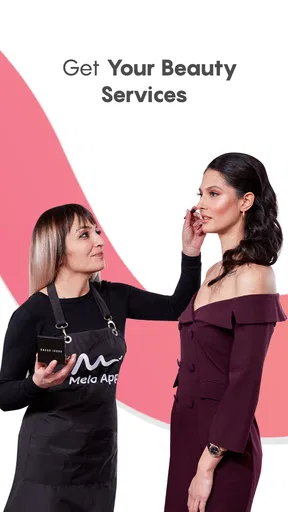
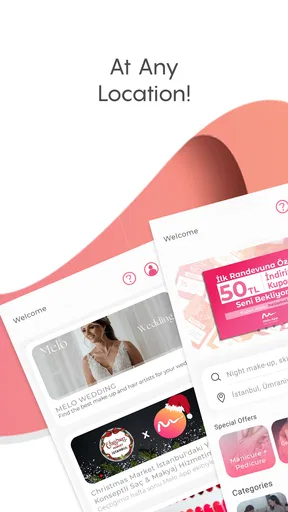
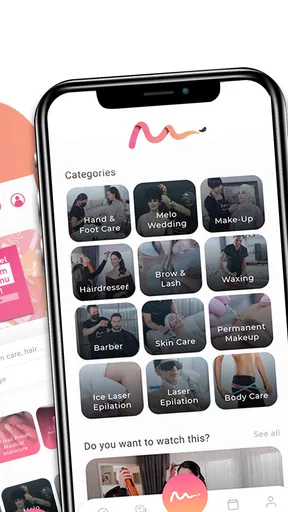
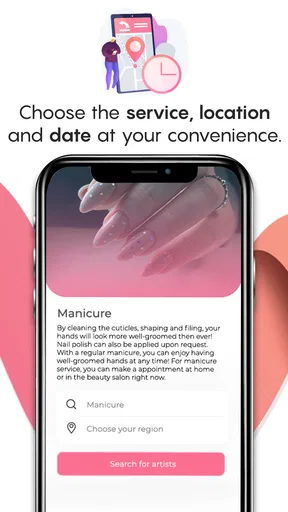

 Analysis by AppCompare
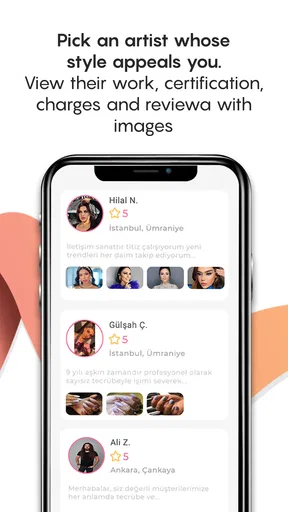
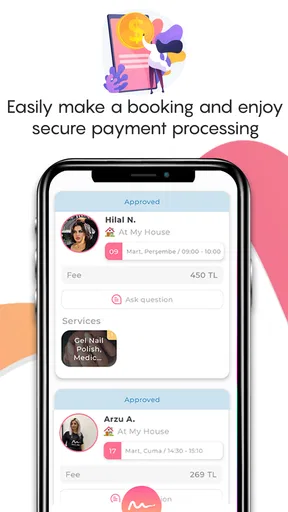
Booking a beauty appointment is usually a small task that becomes surprisingly awkward when it has to fit around work, family, traffic, and a busy salon schedule. Melo App takes a different approach by focusing on personal beauty services delivered at home. I found that idea immediately appealing because it changes the question from “When can I get to the salon?” to “When can a professional come to me?”
This is a free beauty app from MeloKnows Bilgi Teknolojileri ve Reklam Hiz. A.Ş. It is aimed at people who want to arrange beauty care without building their day around a trip outside. The app has passed the early-experiment stage and has reached more than ten thousand installs, while its current version is 16.45. Those details suggest an actively maintained product rather than a one-off booking page, although the experience still depends heavily on how well the available local service network matches your needs.
How Melo App feels in everyday use
The central appeal is convenience. Instead of searching separately for a salon, checking its opening hours, arranging transport, and then waiting for an appointment, I can approach the whole process as an at-home service request. That makes the app particularly interesting for people who work remotely, parents with limited free time, anyone recovering at home, or users who simply prefer a familiar setting for personal care.
A realistic example would be a weekday evening before an important event. The usual alternative might involve leaving work early, travelling across town, finding parking, and hoping the salon is running on schedule. An app built around home visits can remove much of that friction. I would still need to prepare a suitable space and allow enough time for the professional to arrive, but the appointment becomes easier to fit into the day.
I also see a practical benefit for people who dislike crowded waiting areas. Home service is not automatically better for every treatment, but it can feel calmer and more private. Someone who wants a beauty appointment without being seen in a busy salon may appreciate that difference more than a long list of digital features.
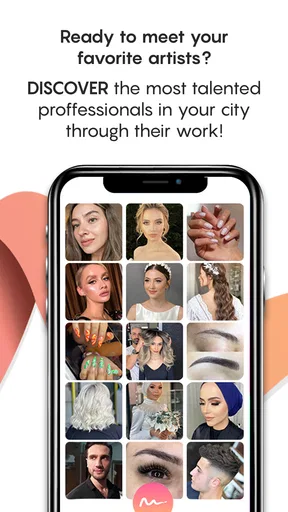
The app’s store summary describes the service plainly: personal beauty services at home. That focus is useful because it sets the right expectation. This is not primarily a beauty education app, a photo editor, or a shopping marketplace. Its value is in helping users arrange personal care where they live.
Who is likely to get the most from it
I would recommend trying Melo App first if convenience matters more to you than having a particular salon atmosphere. It makes the most sense for users who already know the type of beauty service they want and are comfortable receiving it at home. It can also suit people whose schedules change often, provided appointments in their area are available when needed.
Worth Reading Before You Choose

EA SPORTS FC Mobile 26 Is a Bigger Football Game, but It Takes Time

Flipboard Shows What News Apps Must Do Beyond the Feed

Switching to Android Auto Means Rethinking Your Driving Routine

Google Calendar Makes a Crowded Week Easier to Manage

Ludo King Makes the Most of the Minutes Between Plans

Baby Panda World Brings Quick Play to Modern Phones, but Its Game Library Feels Busy
It may be especially helpful before occasions when time is tight. Preparing at home means you can continue getting dressed, organizing children, or handling other small tasks while waiting. That does not eliminate the need to reserve a proper appointment window, but it can reduce the number of separate errands surrounding the treatment.
There is another less obvious use case: coordinating beauty care for someone who finds travel difficult. A home visit may be more manageable for an older relative or a person with temporary mobility limitations. I would still confirm the exact service requirements beforehand, because not every treatment is equally suitable for every home environment.
The trade-off against a regular salon
Compared with calling a familiar salon, Melo App offers a more direct route to home-based care. A phone call can work perfectly when you already have a trusted provider, but it can also involve back-and-forth messages about availability, location, and timing. A dedicated app has the potential to make that process more organized.
The salon still has advantages. It usually provides a purpose-built environment, specialized equipment, and a predictable setup. If you need a treatment that depends on salon infrastructure, the traditional option may be the sensible choice. I would also choose a known salon when the relationship with a particular professional matters more than the convenience of an at-home visit.
Against informal social-media searches, the app’s main advantage is focus. Searching through posts or direct messages can produce plenty of options, but the process may be inconsistent and difficult to compare. Melo App is more appealing when I want a service-oriented route rather than a long search through unrelated content.
How I would use it before confirming an appointment
My advice is to treat the first booking as a short planning exercise rather than tapping through quickly. Start with the service you actually need, then think about the space where it will take place. Good lighting, a clean working area, access to power if required, and enough room for the professional can make the visit smoother.
I would also prepare a short note about practical details before booking. Mentioning the location clearly, identifying access issues, and explaining any relevant preference can prevent avoidable confusion. This is one of the less obvious differences between home service and a salon visit: at a salon, the setup is already standardized; at home, the customer shares responsibility for making the appointment workable.
Another useful habit is to leave a buffer around the appointment. A home visit still involves travel, and a professional may need time to set up or pack away equipment. If I were scheduling this before a wedding, interview, or flight, I would not place the appointment immediately before the event. The convenience is real, but it should not be mistaken for instant service.
What the current version tells me about the product
The current release is version 16.45, which gives the app a more mature feel than a newly launched service. I see that as encouraging because a product supporting appointments needs ongoing attention: booking flows have to remain usable, service information needs to stay clear, and the experience must cope with changing availability.
The app first appeared on January 22, 2020. That history matters when judging its position today. It has had time to move beyond the initial concept of connecting customers with home beauty services, and the current version indicates continued product evolution. At the same time, a version number alone does not tell me that every local market has the same depth of choice, so I would judge the service by what is available in my own area.
For existing users, a newer version can make the experience feel more dependable even when the basic idea has not changed. A returning customer is likely to value a clear path from selecting a treatment to arranging a suitable time. The most meaningful improvements in an app like this are not necessarily flashy; they are the small reductions in uncertainty that make a booking easier to complete.
New users should approach the app with realistic expectations. The app can be a convenient doorway to home beauty care, but it is not a guarantee that every preferred professional, treatment, or time will be available nearby. Local coverage is central to the experience, and that is something I would check early rather than after building plans around a particular appointment.
Small details that can make or break the experience
The first important trade-off is privacy. A home appointment is comfortable for some people, but not everyone wants a service provider entering their personal space. If that feels uncomfortable, a salon remains the better option. I would also make sure another household member knows about the visit when appropriate, especially for a first appointment.
The second is preparation. At a salon, the professional controls the environment. At home, the customer needs to provide a workable setting. This can be a strength because the appointment feels personal and relaxed, but it can also become a source of stress if the room is cramped, noisy, or difficult to access.
The third is timing. A salon appointment takes place at a fixed destination, while a home visit includes travel on the provider’s side. Even with a scheduled slot, I would avoid assuming that the service will begin with the same precision as a chair appointment at a nearby salon. Keeping the schedule flexible is one of the simplest ways to protect the convenience that attracted me to the app in the first place.
A fourth insight is that the app is most valuable when the alternative is genuinely inconvenient. If a trusted salon is five minutes away and already knows my preferences, switching to a home service may add planning rather than remove it. Melo App becomes more compelling when travel, waiting, or coordinating several responsibilities is the main problem.
Where the experience still has limits
The biggest limitation is not necessarily the interface; it is the nature of local service marketplaces. The usefulness of a home beauty app depends on the providers serving the customer’s location and the times they can accept. Someone in a well-covered area may find the concept practical, while another user may open the app and discover that the available choices do not match a specific request.
There is also a personal-comfort barrier. Some customers enjoy the professional atmosphere of a salon and the separation between home life and self-care. For them, an at-home visit may feel less relaxing, particularly if children, pets, roommates, or household interruptions are present.
I would not choose this app when I need a highly specialized treatment that requires equipment unavailable in a home setting. I would also be cautious when an appointment has strict timing and no room for travel-related variation. In those situations, a nearby specialist with a fixed studio may provide more predictable conditions.
Another limitation is that convenience can encourage rushed decisions. Because arranging a service at home feels easy, it is tempting to focus only on the appointment time. I think users should give equal attention to the treatment itself, the preparation needed, and whether the setting is appropriate. The app can simplify access, but it cannot replace sensible planning.
Compatibility, cost, and accessibility
Melo App is free to install, which lowers the barrier to trying it. That does not mean every beauty service is free, of course; the app is a way to arrange services, and the cost of a selected appointment should be considered before confirming it. I would review the booking details carefully and avoid treating the app’s free download as a promise about service pricing.
The application is suitable for Everyone and requires Android 7.0 or later. That makes it accessible to many Android users, including people who do not replace their phone frequently. If your device runs an older Android release, compatibility is the first practical question to settle before planning around the service.
The developer is MeloKnows Bilgi Teknolojileri ve Reklam Hiz. A.Ş, and the app has attracted over ten thousand installs. I read that reach as evidence that the concept has found an audience, but not as a reason to assume it will be equally useful everywhere. For a location-based service, personal availability matters more than broad download numbers.
What I would like users to watch as the product evolves
For future use, I would pay attention to how clearly the app communicates service details before the appointment. Home visits benefit from precise expectations: what the customer should prepare, how much space is useful, and what happens if access or timing changes. Improvements in that kind of guidance would have a direct effect on trust.
I would also watch whether returning customers can manage repeat care without unnecessary effort. Beauty routines often involve recurring appointments, so a smooth repeat-booking experience could be more valuable than adding decorative features. The best evolution for this product would preserve its simple purpose while reducing the small uncertainties around each visit.
Another area worth watching is the balance between choice and consistency. More providers can create flexibility, but users also need enough information to choose confidently. A broad marketplace is not automatically better if the booking process leaves important practical questions unanswered.
My recommendation after using it
I came away viewing Melo App as a focused solution rather than a universal replacement for salons. Its strongest idea is straightforward: bring personal beauty services into the customer’s home and make that option easier to arrange. For busy people, homebound users, and anyone who values privacy and reduced travel, that can be a meaningful improvement to an ordinary appointment.
I would recommend giving it a try if you are open to home visits and your main goal is convenience. Before committing, I would check local availability, prepare the space, leave time around the appointment, and confirm that the chosen service suits a home environment. Those steps are not obstacles; they are what turn the app’s promise into a smoother real-world experience.
I would skip it if you strongly prefer salon equipment, a particular established stylist, or a completely controlled appointment setting. In those cases, the traditional route may remain better. For everyone else, this free beauty app is worth exploring because it tackles a familiar problem from a useful angle. Its real strength is not novelty for its own sake, but the practical freedom to receive beauty care without making the salon the center of your day.
Pros
- Simple interface makes browsing and playing music easy.
- Personalized recommendations help users discover new tracks.
- Supports playlists for organizing favorite songs.
- Music playback is generally smooth on stable connections.
- Useful search tools make finding artists and songs quick.
Cons
- Some features may require a paid subscription.
- The catalog can vary by country or licensing agreements.
- Offline listening may be limited to premium users.
- Audio quality options may depend on the selected subscription.
- Background playback can consume battery during extended sessions.
FAQs for Melo App
What is the Melo App, and what can I use it for?
Melo App is designed to provide users with a convenient way to enjoy and interact with music and entertainment content from a mobile device. Depending on the available version and region, you may be able to discover songs, follow artists, create playlists, and personalize your listening experience. Before downloading, check the current app description because features, supported content, and availability can vary between Android and iOS.
Is Melo App free to download and use?
Melo App may be available as a free download, but some features or content can require in-app purchases, a subscription, or an account. Users should review the pricing information shown in the Google Play Store or Apple App Store before installing it. Also check whether subscriptions renew automatically, what trial conditions apply, and whether certain functions are limited in the free version.
Does Melo App require an internet connection?
An internet connection is generally needed for downloading content, browsing the service, streaming media, signing in, and synchronizing account information. Depending on the version of Melo App, some content may be available for offline use after it has been saved or downloaded. Offline access is not guaranteed for every feature, so users should confirm the app’s current capabilities and data requirements before relying on it while traveling.
Is Melo App safe to install and does it protect my personal information?
Melo App should be downloaded only from its official Google Play Store or Apple App Store listing to reduce the risk of installing an altered or unsafe file. During setup, review the permissions requested and provide only information you are comfortable sharing. It is also important to read the developer’s privacy policy, since the app may collect account, device, usage, or payment-related data depending on the features you use.
Which devices are compatible with Melo App, and are there any limitations?
Compatibility depends on the operating system, device model, available storage, and the minimum Android or iOS version supported by the current release. Older phones may experience slower performance, limited functionality, or installation problems even when the app appears in the store. Before downloading Melo App, check the official store page for system requirements, recent update information, regional availability, and any device-specific restrictions.


